High-Impact Learning

Lyman Briggs College has long been a hub for teaching innovation, where faculty are focused on helping students grow, succeed, and thrive. A central way we do this is through High-Impact Practices (HIPs). HIPs, identified and advanced by the Association of American Colleges & Universities, are active learning practices that promote deep learning through student engagement. HIPs are intentionally designed. Students spend significant time on meaningful work. They collaborate with peers and faculty. They receive frequent feedback and build reflective practices. And they connect their learning to real-world questions and challenges. Examples include learning communities, global learning, internships, service-learning, and capstone projects.

In 2024, MSU President Kevin M. Guskiewicz, Ph.D., announced strategic initiatives to bolster the university and focus its efforts for broader impact. One of the initiatives, modernizing the general education curriculum with high-impact and best practices, has the aim of attracting talented students from all backgrounds and preparing them for a rapidly changing world and workplace through meaningful, high‑quality learning experiences.

HIPs have powerful results. Research shows that students who participate in them are more likely to stay in college, earn higher grades, and graduate sooner. They also build strong skills in critical thinking, communication, and problem-solving—skills that employers value. When universities ensure broad access to these experiences, HIPs can help close equity gaps by providing structured, supportive opportunities that help first-generation students and others who have not always had equitable access to higher education succeed.

Hero Image Large
Hero Image Small
high-impact map

High-Impact Practices at Lyman Briggs College

Image
a student chats with a faculty member one-on-one

Residential Learning

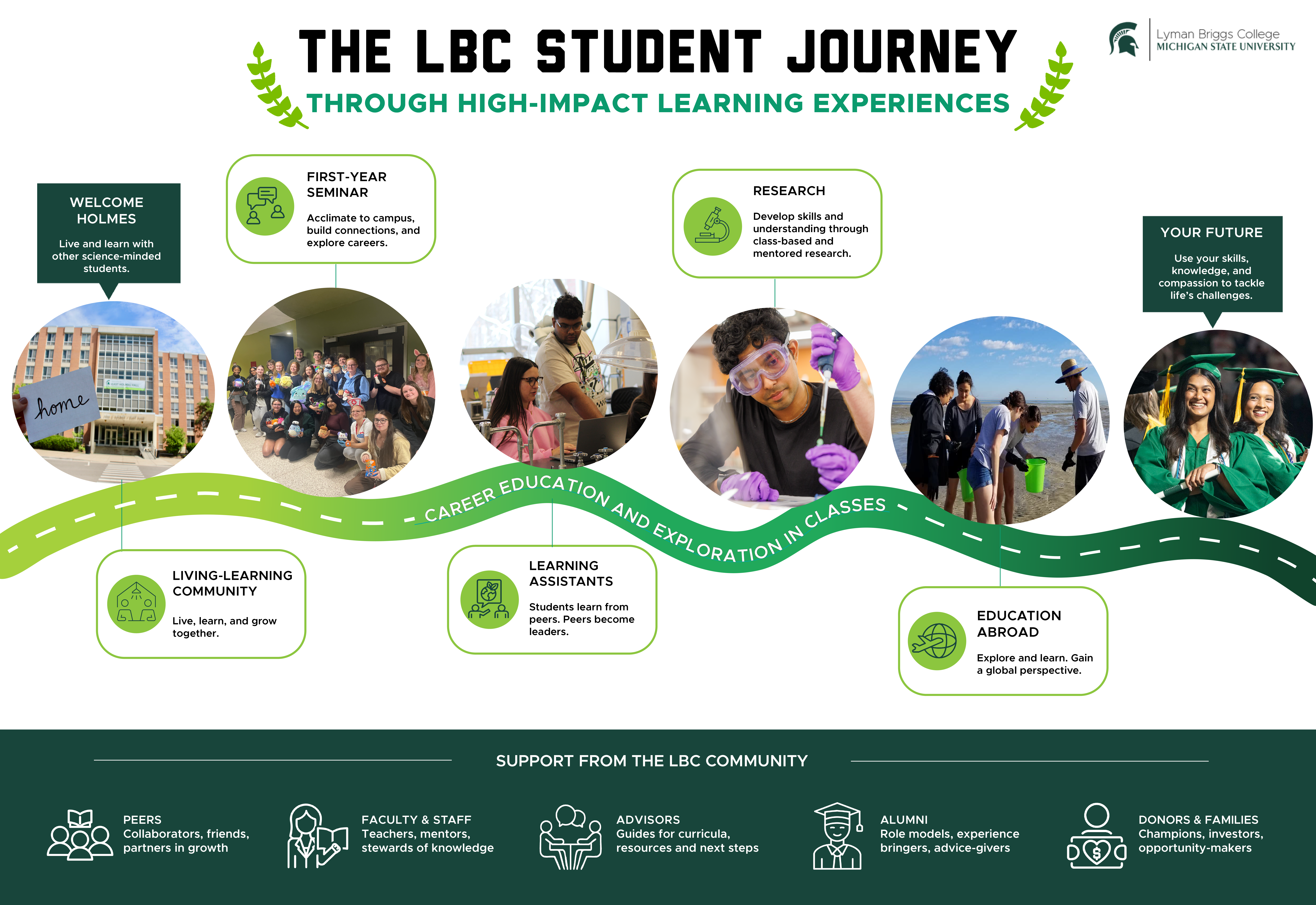
Since our inception as a residential college in 1967, we have embodied a high-impact practice: Offering students a living-learning community in Holmes Hall. All first-year LBC students live and study in Holmes. Housing, dining, faculty and staff offices, classrooms, and laboratories are all under one roof. Students have a built-in community, attend classes with students from their floors, and can easily form study groups. Further, our small class sizes foster strong connections between students and faculty.

Image
Collage of four images from Wytham Woods, Oxford, England

Global Learning

Michigan State University is a world leader in education abroad, and Lyman Briggs College is active in creating options for its students. Every year, students have dozens of options in programs led by LBC faculty, partner programs, and more.

Image
A student presents research to a faculty mentor at the LBC Research Showcase

Undergraduate Research

Undergraduate research is a powerful learning experience in LB courses. Many students conduct research in departments and labs across campus. Others find opportunities right here in LBC through faculty-led projects in the Fall, Spring, and Summer semesters. Students develop their skills and follow their curiosity through these experiences. LBC students present research at college and university showcases. 

Image
A group of students with mentor t-shirts on smile at the beginning of the school year

Briggs First-Year Seminar

This one-credit course, piloted in Fall 2025, equips students with essential academic and professional skills—time management, scientific study strategies, goal setting—while fostering a strong sense of belonging within the Briggs community. What sets the Briggs First-Year Seminar apart is its peer-led model: experienced student mentors, supported by faculty experts, guide small-group discussions, facilitate interactive learning, and provide individualized support to the newest Briggsies.

Image
A student helps teach another student in a chemistry lab

Undergraduate Learning Assistants

Undergraduate Learning Assistants (ULAs) are typically upper-level LBC students who assist faculty in providing an enriching and supported educational environment in lectures, recitations, and labs. This near-peer learning program provides greater levels of content mastery and leadership skills for the learning assistants, while greatly benefiting the students who learn course material from their peers. In fact, national research has shown that students report higher levels of satisfaction in courses with learning assistants, than those in courses without. 

Image
Students and recent alumni work on medical school personal statements

Career Education

The LBC career team works with students, faculty, campus partners and employers throughout the year, helping to connect Briggs students with real-world exploration, employment, and education opportunities. Career advisors in LBC work closely with faculty and have even developed an integrated career education component to some of our intro biology classes.

Image
the students success & advising team

Dedicated Academic Advising

Our Student Success and Advising Team supports students from application to graduation, through advising in drop-in consultations, appointments, and enrollment sessions. They have specialized knowledge of LBC curriculum, majors, and university degree requirements. They also coordinate resources for students facing food insecurity, develop community-building events, and look out for the whole student.

Image
A group of students and donors stand outside for a photo. Briggs Summer Scholars from 2023

Briggs Summer Scholars

Briggs Summer Scholars (BSS) is a summer program that allows incoming students to get a jump start on their math requirement while building essential skills for being successful in Briggs. Incoming first-year students who take the math placement test and are placed in Math 103 are eligible to take part in this program. 

2
Yes
50px

Ecosystem of LBC High-Impact Practices

Image
An outline of the ecosystem of HIPS at LBC